Food Amount Calcium (In mg)
Yogurt, plain, low fat 8 oz 415
Skim milk 1 cup 306
Spinach, frozen, Boiled 1 cup 291
Yogurt,plain,whole milk 8 oz 275
Cheese food, pasteurized American 1 oz 162
Cottage cheese,1% milk fat 1 cup 138
Baked beans, canned 1 cup 154
Oranges 1 cup 72
Trail mix (nuts, seeds, chocolate chips) 1 cup 159
Almonds 1 oz (24 nuts) 70
Black eye peas, boiled 1 cup 211
Green peas, boiled 1 cup 94
Food Folic Acid μg/Serving
Dietary Folate Equivalents*(DFE)
Ready-to-eat breakfast cereal 100 – 400/serving; read labels
Enriched wheat tortilla 98 / one 8” tortilla
Whole wheat tortilla 24 / one 8” tortilla
Enriched white bread 39 / slice
Enriched pasta, cooked 92 / half cup
Whole wheat bread 14 / slice
Whole wheat pasta 23 / half cup
Lentils, cooked 180 / cup
Black-eyed peas, dried, cooked 105 / half cup
Pinto beans or chickpeas, cooked 140 – 145 / half cup
Sunflower seeds, dry-roasted 152 / half cup
Okra, cooked 37 / half cup
Orange juice 60-100 / cup
Spinach, raw 58 / cup
Asparagus 110 / 5 spears
Collards, frozen 88 / half cup
Grapefruit/pineapple juice 23 / cup
Showing posts with label medical notes. Show all posts
Showing posts with label medical notes. Show all posts
Tuesday, 11 May 2010


Sunday, 14 February 2010
G6PD deficiency
Assalamualaikum wbt...
Untuk rujukan diriku dikala dihujani dengan persoalan2 yang sememangnya menantikan penerangan atau penjelasan...
what is Glucose-6-phosphate dehydrogenase deficiency
• X-linked recessive hereditary disease (penyakit keturunan)
• characterised by abnormally low levels of glucose-6-phosphate dehydrogenase (abbreviated G6PD or G6PDH), a metabolic enzyme involved in the pentose phosphate pathway, especially important in red blood cell metabolism.
• Individuals with the disease may exhibit nonimmune hemolytic anemia in response to a number of causes, most commonly infection or exposure to certain medications or chemicals.
• Is closely linked to favism, a disorder characterized by a hemolytic reaction to consumption of broad beans,
All mutations that cause G6PD deficiency
• are found on the long arm of the X chromosome, on band Xq28.
• The G6PD gene spans some 18.5 kilobases.[3]
Signs /symptoms
• Most individuals with G6PD deficiency are asymptomatic.
• Symptomatic patients are almost exclusively male, due to the X-linked pattern of inheritance,
• but female carriers can be clinically affected due to unfavorable Lyonization, where random inactivation of an X-chromosome in certain cells creates a population of G6PD-deficient red blood cells coexisting with normal red cells.
• Abnormal red blood cell breakdown (hemolysis) in G6PD deficiency can manifest in a number of ways:
-Prolonged neonatal jaundice, possibly leading to kernicterus (arguably the most serious complication of G6PD deficiency)
• Hemolytic crises in response to: (perkara perkara yang menyebabkan pengidap g6pd deficiency lebih teruk)
-Illness (especially infections)
-Certain drugs (see below)
-Certain foods, most notably broad beans
-Certain chemicals
-Diabetic ketoacidosis
• Very severe crises can cause acute renal failure
Many substances are potentially harmful to people with G6PD deficiency, variation in response to these substance makes individual predictions difficult.
• Antimalarial drugs that can cause acute haemolysis in people with G6PD deficiency include ¬¬-primaquine, pamaquine and chloroquine.
• -There is evidence that other antimalarials may also exacerbate G6PD deficiency, but only at higher doses.
• Sulfonamides (such as sulfanilamide, sulfamethoxazole and mafenide), thiazolesulfone, methylene blue and naphthalene should also be avoided by people with G6PD deficiency, as should
• certain analgesics (such as aspirin, phenazopyridine and acetanilide) and
• a few non-sulfa antibiotics (nalidixic acid, nitrofurantoin, and furazolidone).[1][3][4]
• Henna has been known to cause haemolytic crisis in G6PD-deficient infants.[5]
Diagnosis
The diagnosis is generally suspected when patients from certain ethnic groups (see epidemiology) develop anemia, jaundice and symptoms of hemolysis after challenges from any of the above causes, especially when there is a positive family history.
Generally, tests will include:
• Complete blood count and reticulocyte count; in active G6PD, Heinz bodies can be seen in red blood cells on a blood film;
• Liver enzymes (to exclude other causes of jaundice);
• Lactate dehydrogenase (elevated in hemolysis and a marker of hemolytic severity)
• Haptoglobin (decreased in hemolysis);
• A "direct antiglobulin test" (Coombs' test) - this should be negative, as hemolysis in G6PD is not immune-mediated;
• When there are sufficient grounds to suspect G6PD, a direct test for G6PD is the "Beutler fluorescent spot test", which has largely replaced an older test (the Motulsky dye-decolouration test).
• Other possibilities are direct DNA testing and/or sequencing of the G6PD gene.
The Beutler fluorescent spot test is a rapid and inexpensive test that visually identifies NADPH produced by G6PD under ultraviolet light. When the blood spot does not fluoresce, the test is positive; it can be falsely negative in patients who are actively hemolysing. It can therefore only be done 2-3 weeks after a hemolytic episode.

Untuk rujukan diriku dikala dihujani dengan persoalan2 yang sememangnya menantikan penerangan atau penjelasan...
what is Glucose-6-phosphate dehydrogenase deficiency
• X-linked recessive hereditary disease (penyakit keturunan)
• characterised by abnormally low levels of glucose-6-phosphate dehydrogenase (abbreviated G6PD or G6PDH), a metabolic enzyme involved in the pentose phosphate pathway, especially important in red blood cell metabolism.
• Individuals with the disease may exhibit nonimmune hemolytic anemia in response to a number of causes, most commonly infection or exposure to certain medications or chemicals.
• Is closely linked to favism, a disorder characterized by a hemolytic reaction to consumption of broad beans,
All mutations that cause G6PD deficiency
• are found on the long arm of the X chromosome, on band Xq28.
• The G6PD gene spans some 18.5 kilobases.[3]
Signs /symptoms
• Most individuals with G6PD deficiency are asymptomatic.
• Symptomatic patients are almost exclusively male, due to the X-linked pattern of inheritance,
• but female carriers can be clinically affected due to unfavorable Lyonization, where random inactivation of an X-chromosome in certain cells creates a population of G6PD-deficient red blood cells coexisting with normal red cells.
• Abnormal red blood cell breakdown (hemolysis) in G6PD deficiency can manifest in a number of ways:
-Prolonged neonatal jaundice, possibly leading to kernicterus (arguably the most serious complication of G6PD deficiency)
• Hemolytic crises in response to: (perkara perkara yang menyebabkan pengidap g6pd deficiency lebih teruk)
-Illness (especially infections)
-Certain drugs (see below)
-Certain foods, most notably broad beans
-Certain chemicals
-Diabetic ketoacidosis
• Very severe crises can cause acute renal failure
Many substances are potentially harmful to people with G6PD deficiency, variation in response to these substance makes individual predictions difficult.
• Antimalarial drugs that can cause acute haemolysis in people with G6PD deficiency include ¬¬-primaquine, pamaquine and chloroquine.
• -There is evidence that other antimalarials may also exacerbate G6PD deficiency, but only at higher doses.
• Sulfonamides (such as sulfanilamide, sulfamethoxazole and mafenide), thiazolesulfone, methylene blue and naphthalene should also be avoided by people with G6PD deficiency, as should
• certain analgesics (such as aspirin, phenazopyridine and acetanilide) and
• a few non-sulfa antibiotics (nalidixic acid, nitrofurantoin, and furazolidone).[1][3][4]
• Henna has been known to cause haemolytic crisis in G6PD-deficient infants.[5]
Diagnosis
The diagnosis is generally suspected when patients from certain ethnic groups (see epidemiology) develop anemia, jaundice and symptoms of hemolysis after challenges from any of the above causes, especially when there is a positive family history.
Generally, tests will include:
• Complete blood count and reticulocyte count; in active G6PD, Heinz bodies can be seen in red blood cells on a blood film;
• Liver enzymes (to exclude other causes of jaundice);
• Lactate dehydrogenase (elevated in hemolysis and a marker of hemolytic severity)
• Haptoglobin (decreased in hemolysis);
• A "direct antiglobulin test" (Coombs' test) - this should be negative, as hemolysis in G6PD is not immune-mediated;
• When there are sufficient grounds to suspect G6PD, a direct test for G6PD is the "Beutler fluorescent spot test", which has largely replaced an older test (the Motulsky dye-decolouration test).
• Other possibilities are direct DNA testing and/or sequencing of the G6PD gene.
The Beutler fluorescent spot test is a rapid and inexpensive test that visually identifies NADPH produced by G6PD under ultraviolet light. When the blood spot does not fluoresce, the test is positive; it can be falsely negative in patients who are actively hemolysing. It can therefore only be done 2-3 weeks after a hemolytic episode.

Folic acid
Assalamualaikum wbt...
folic acid @ vitamin B9 also called Pteroylglutamic Acid, Folate, or Folacin
it is needed to - synthesis of nucleic acids (helps the body make healthy new cells)
- formation of heme, the pigmented, iron-carrying component of the hemoglobin in red blood cells
-efficient neural tube development during pregnancy which forms the brain and spinal cord.
- reduce the risk for other birth defects, such as cleft lip and palate and certain congenital heart defects.
Effect of deficient folic acid :
- impair the maturation of young red blood cells, resulting in folic-acid-deficiency anemia.
- premature delivery
- deliver babies with low birth weight or with neural tube defects(spina bifida , anencepaly)
- DNA synthesis and repair are impaired and this could lead to cancer development
- during pregnancy : can increase the risk of preterm delivery,
- infant low birth weight,
- fetal growth retardation.
- Folate deficiency in the mother : increases homocysteine level in the blood which may lead to
-spontaneous abortion
-pregnancy complications such as placental abruption and preeclampsia
sources of folic acid:
- leafy green vegetables, ( spinach, asparagus, turnip greens, romaine lettuces)
- vegetables (beets, broccoli, corn, tomato juice, vegetable juice, brussels sprouts, bok choy)
- fruits (orange juice, canned pineapple juice, cantaloupe, honeydew melon, grapefruit juice, banana, raspberry, grapefruit, strawberry
- dried beans, peas and nuts.
- Enriched breads, cereals and other grain products

Wednesday, 27 January 2010
eczema / atopic dermatitis / kulit kering

Sekarang di Yokohama musim sejuk...kekadang suhu mencecah 0 darjah..sejuk...cuma disini ada heater,untuk memanaskan rumah...24jam heater bekerja...kulit zameer memang tak sesuai untuk berada di kawasan yang humidity nya tinggi...sekarang ni kulit zameer sangat kering, kasar dan merah merah...memang dari kecil lagi kulitnya agak sensitif ,andai ibu salah makan ,lambat tukar pampers,lambat basuh mulut pun ,merah2 dikulitnya akan timbul.
Eczema / atopic dermatitis telah didiagnos sewaktu dia kecil dahulu. Di Malaysia,sekiranya dia dimandikan dengan mandian dan cream yang dibekalkan dari klinik ,InsyaAllah kulitnya akan licin cantik..
sabun Isoderm dan cream (corticosteroid dan pure petroleum jelly/vaseline) adalah antara ubat yang dipakainya...
dibawah ni ada fakta tentang eczema @ atopic dermatitis,untuk rujukan diriku dan dikongsi bersama.
a skin rash that often appears in the first year of life.
Eczema usually shows up on a baby's forehead, cheeks, and scalp, but it can spread to the arms, legs, chest, or other parts of the body.
The rash might look like dry, thickened, scaly skin, or it might be made up of tiny red bumps that can blister, ooze, or become infected if scratched.
Eczema isn't contagious, but because it's intensely itchy, scratching can be a problem.
What causes eczema?
No one knows for sure, but we do know that the tendency to have eczema is often inherited.
So your baby is more likely to have it if you or a close family member has had eczema, asthma, or allergies.
Eczema is not an allergic reaction to a substance, but it can be triggered by allergens in your baby's diet — or in your diet if you're breastfeeding.
The rash can also be aggravated by heat, irritants that come in contact with your baby's skin (like wool or the chemicals in some soaps, lotions, and detergents), changes in temperature, and dry skin.
How common is eczema?
About 20 percent of infants and young children have eczema. It usually starts in infancy, with 65 percent of patients developing symptoms in the first year of life and 90 percent developing symptoms before age 5. About 60 percent of cases persist into adulthood, although many babies with the condition improve by the age of 2.
What can I do to treat my baby's eczema?
Eczema news update: A study published in the May 2009 issue of Pediatrics tested treatments on kids with eczema ages 6 months to 17 years. They found that soaking for five to ten minutes twice a week in a diluted bleach bath (1/2 cup bleach per full standard-size tub) was five times more effective at treating eczema than plain water (used by the placebo group). The improvement was so dramatic that researchers stopped the study early to allow children in the placebo group to get relief with the method. Try it! (But ask your child's doctor first.)
Taking good care of your baby's skin is crucial. Here are some tips:
Try to keep your baby's skin from becoming too dry. Talk with her doctor about how often to bathe her. Many experts now believe that daily bathing can be helpful for babies with eczema. Just don't make the water too warm, because very warm water dries out the skin faster than lukewarm water.
Use a mild soap, and wash and shampoo your baby at the end of her bath so she isn't sitting in soapy water. As soon as you get your baby out of the tub, pat her skin dry (don't rub), then promptly apply a liberal amount of moisturizer or emollient — an ointment, cream, or lotion that "seals in" the body's own moisture.
"I recommend emollients for children of all ages," says Michael Smith, associate professor of medicine and pediatrics in the division of dermatology at Vanderbilt Medical Center in Nashville. Smith suggests trying an emollient for a short period of time to see whether it makes a difference and continuing it if it does.
Allow your baby's skin to breathe (and not become overheated) by dressing her in smooth natural fabrics, like cotton. Avoid wool and other scratchy materials, which can irritate her very sensitive skin.
Switch to mild, fragrance-free soaps and shampoos, or those made for sensitive skin. Use mild, fragrance-free detergent for washing your baby's clothes and bedding. Avoid fabric softeners.
Rapid changes in temperature can make eczema worse, so try not to let your baby get too hot and then cool quickly, or vice versa.
Help your baby avoid scratching. She may try to get relief by scratching with her hands or by rubbing her face against the sheet when she sleeps. But scratching and rubbing can further irritate or inflame her skin and make matters much worse.
Use the softest sheets possible in her crib, and keep her nails short. Put her to bed with cotton mittens or socks on her hands, if she'll tolerate them.
During a flare-up, you can try applying cool compresses to the area several times a day, followed by a moisturizer.

Thursday, 21 January 2010
Measles / Demam campak
Measles @ demam campak is different from chicken pox.The difference between them,i stated at the end of this notes , just as a references for me in the future
•measles is an infection of the respiratory system caused by a virus, specifically a paramyxovirus of the genus Morbillivirus. Morbilliviruses, like other paramyxoviruses, are enveloped, single-stranded, negative-sense RNA viruses.
• Symptoms include fever, cough, runny nose, red eyes and a generalized, maculopapular, erythematous rash.
• Measles is spread through respiration (contact with fluids from an infected person's nose and mouth, either directly or through aerosol transmission), and is highly contagious—90% of people without immunity sharing a house with an infected person will catch it.
• The infection has an average incubation period of 14 days (range 6–19 days) and infectivity lasts from 2–4 days prior, until 2–5 days following the onset of the rash (i.e. 4–9 days infectivity in total).[1]
• The classical symptoms of measles include four day fevers, the three Cs—cough, coryza (runny nose) and conjunctivitis (red eyes).
• The fever may reach up to 40 °C (104 °F).
• Koplik's spots seen inside the mouth are pathognomonic (diagnostic) for measles but are not often seen, even in real cases of measles, because they are transient and may disappear within a day of arising.
• The characteristic measles rash is classically described as a generalized, maculopapular, erythematous rash that begins several days after the fever starts. It starts on the head before spreading to cover most of the body, often causing itching. The rash is said to "stain", changing colour from red to dark brown, before disappearing.[citation needed]
Complications
• Complications with measles are relatively common, ranging from relatively mild and less serious diarrhea, to pneumonia and encephalitis (subacute sclerosing panencephalitis), corneal ulceration leading to corneal scarring.[5]
• Complications are usually more severe amongst adults who catch the virus.
• The fatality rate from measles for otherwise healthy people in developed countries is 3 deaths per thousand cases, or .3%.[6] In underdeveloped nations with high rates of malnutrition and poor healthcare, fatality rates have been as high as 28%.[6] In immunocompromised patients (e.g. people with AIDS) the fatality rate is approximately 30 percent.[7]
Diagnosis
• Clinical diagnosis of measles requires a history of fever of at least three days together with at least one of the three C's (cough, coryza, conjunctivitis). Observation of Koplik's spots is also diagnostic of measles.
• Alternatively, laboratory diagnosis of measles can be done with confirmation of positive measles IgM antibodies or isolation of measles virus RNA from respiratory specimens. In children, where phlebotomy is inappropriate, saliva can be collected for salivary measles specific IgA test. Positive contact with other patients known to have measles adds strong epidemiological evidence to the diagnosis. The contact with any infected person in any way, including semen through sex, saliva, or mucus can cause infection.
treatment
• There is no cure for measles. Most patients with uncomplicated measles will recover with rest and supportive treatment.
• Some patients will develop pneumonia as a sequel to the measles.
• Other complications include ear infections, bronchitis, and encephalitis.
• Acute measles encephalitis has a mortality rate of 15%, while there is no specific treatment for measles encephalitis, antibiotics are required for bacterial pneumonia, sinusitis, and bronchitis that can follow measles. All other treatment is symptomatic, with ibuprofen, or acetaminophen to reduce fever and pain, a fast acting bronchodialater for cough.

differences measles / Chicken pox
virus: M: paramyxovirus
C: varicella zoster virus ZV
symptoms : M: fever, cough, runny nose, red eyes and a generalized, maculopapular, erythematous rash.
C: in adolescents and adults: anorexia, myalgia, nausea, fever, headache, and malaise
in children: papular rash, followed by devolopment of malaise, fever [a temperature of
100-102F, but may be as high as 106F in rare cases], and anorexia.
Spreading method : M: through respiration (contact with fluids from an infected person's nose and mouth,
either directly or through aerosol transmission), and is highly contagious
C: coughs or sneezes of ill individuals, or through direct contact with secretions from the
rash.
Incubation period : M: average incubation period of 14 days (range 6–19 days)
C: 10 to 21 days after contact with an infected person for someone to develop
chickenpox.
Infectivity period: M: infectivity lasts from 2–4 days prior, until 2–5 days following the onset of the rash
(i.e. 4–9 days infectivity in total).[1]
C: infectious from 1 to 5 days before the rash appears.[4]
The contagious period continues until all blisters have formed scabs, which may take 5
to 10 days.
•measles is an infection of the respiratory system caused by a virus, specifically a paramyxovirus of the genus Morbillivirus. Morbilliviruses, like other paramyxoviruses, are enveloped, single-stranded, negative-sense RNA viruses.
• The classical symptoms of measles include four day fevers, the three Cs—cough, coryza (runny nose) and conjunctivitis (red eyes).
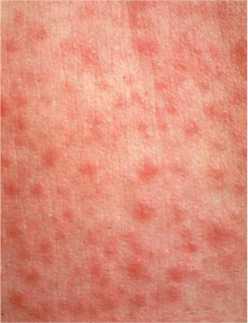
this is the measles spot that distinguish from the chicken pox, generalised maculopapular erythematous rash
virus: M: paramyxovirus
C: varicella zoster virus ZV
symptoms : M: fever, cough, runny nose, red eyes and a generalized, maculopapular, erythematous rash.
C: in adolescents and adults: anorexia, myalgia, nausea, fever, headache, and malaise
in children: papular rash, followed by devolopment of malaise, fever [a temperature of
100-102F, but may be as high as 106F in rare cases], and anorexia.
Spreading method : M: through respiration (contact with fluids from an infected person's nose and mouth,
either directly or through aerosol transmission), and is highly contagious
C: coughs or sneezes of ill individuals, or through direct contact with secretions from the
rash.
Incubation period : M: average incubation period of 14 days (range 6–19 days)
C: 10 to 21 days after contact with an infected person for someone to develop
chickenpox.
Infectivity period: M: infectivity lasts from 2–4 days prior, until 2–5 days following the onset of the rash
(i.e. 4–9 days infectivity in total).[1]
C: infectious from 1 to 5 days before the rash appears.[4]
The contagious period continues until all blisters have formed scabs, which may take 5
to 10 days.
chicken pox / bertih / jentungan
last week, one of my friend asked me regarding chicken pox.Since my hypotalamus not actively storing informations and knowledges, it was a bit tough to explain regarding that topic.I need to revise again before i gave her a call to talk that topic, so that i didn't give wrong informations. Alhamdulillah, i hope it could help her a little bit...
here,i just want to share my notes . so that it can be as a references for me in the future, InsyaAllah
chicken pox :
• highly contagious illness
• caused by primary infection with varicella zoster virus ZV).
• It usually starts with vesicular skin rash mainly on the body and head rather than at the periphery and become itchy raw pockmarks which mostly heal without scarring.
• Is spread easily through coughs or sneezes of ill individuals, or through direct contact with secretions from the rash. Following primary infection there is usually lifelong protective immunity from further episodes of chickenpox.
• Chickenpox is rarely fatal, although it is generally more severe in adult males than in adult females or children. Pregnant women and those with a suppressed immune system are at highest risk of serious complications. The most common late complication of chicken pox is shingles, caused by reactivation of the varicella zoster virus decades after the initial episode of chickenpox
• A person with chickenpox is infectious from one to five days before the rash appears.
• The contagious period continues until all blisters have formed scabs, which may take 5 to 10 days.
• It takes from 10 to 21 days after contact with an infected person for someone to develop chickenpox.
• is often heralded by a prodrome of anorexia, myalgia, nausea, fever, headache, and malaise in adolescents and adults,
• while in children the first symptom is usually the development of a papular rash, followed by devolopment of malaise, fever [a temperature of 100-102F, but may be as high as 106F in rare cases], and anorexia.
• Rarely cough, rhinitis, abdominal pain, and gastrointestinal distress has been reported in pateints with varicella.Typically, the disease is more severe in adults
Infection in pregnancy and neonates
• For pregnant women, antibodies produced as a result of immunization or previous infection are transferred via the placenta to the fetus.[7]
• Women who are immune to chickenpox cannot become infected and do not need to be concerned about it for themselves or their infant during pregnancy.[8]
• Varicella infection in pregnant women can lead to viral transmission via the placenta and infection of the fetus.
• If infection occurs during the first 28 weeks of gestation, this can lead to fetal varicella syndrome (also known as congenital varicella syndrome).[9]
• Effects on the fetus can range in severity from underdeveloped toes and fingers to severe anal and bladder malformation. Possible problems include:
• Damage to brain: encephalitis,[10] microcephaly, hydrocephaly, aplasia of brain
• Damage to the eye: optic stalk, optic cap, and lens vesicles, microphthalmia, cataracts, chorioretinitis, optic atrophy
• Other neurological disorder: damage to cervical and lumbosacral spinal cord, motor/sensory deficits, absent deep tendon reflexes, anisocoria/Horner's syndrome
• Damage to body: hypoplasia of upper/lower extremities, anal and bladder sphincter dysfunction
• Skin disorders: (cicatricial) skin lesions, hypopigmentation
• Infection late in gestation or immediately following birth is referred to as "neonatal varicella".[11] Maternal infection is associated with premature delivery. The risk of the baby developing the
disease is greatest following exposure to infection in the period 7 days prior to delivery and up to 7 days following the birth.
• The baby may also be exposed to the virus via infectious siblings or other contacts, but this is of less concern if the mother is immune.
• Newborns who develop symptoms are at a high risk of pneumonia and other serious complications of the disease.[12]
Pathophysiology
• Exposure to VZV in a healthy child initiates the production of host immunoglobulin G (IgG), immunoglobulin M (IgM), and immunoglobulin A (IgA) antibodies;
• IgG antibodies persist for life and confer immunity.
• Cell-mediated immune responses are also important in limiting the scope and the duration of primary varicella infection.
• After primary infection, VZV is hypothesized to spread from mucosal and epidermal lesions to local sensory nerves.
• VZV then remains latent in the dorsal ganglion cells of the sensory nerves.
• Reactivation of VZV results in the clinically distinct syndrome of herpes zoster (i.e., shingles), and sometimes Ramsay Hunt syndrome type II
Diagnosis
• Early rash of smallpox vs chickenpox: rash mostly on the torso is characteristic of chickenpox
• The diagnosis of varicella is primarily clinical. In a non-immunized individual with typical early nonspecific, or "prodromal", symptoms associated with the appropriate appearing rash occurring in "crops".
• Confirmation of the diagnosis can be sought through either examination of the fluid within the vesicles, or by testing blood for evidence of an acute immunologic response.
• Vesicular fluid can be examined with a Tsanck smear, or better with examination for direct fluorescent antibody.
• The fluid can also be "cultured", whereby attempts are made to grow the virus from a fluid sample. Blood tests can be used to identify a response to acute infection (IgM) or previous infection and subsequent immunity (IgG).[13]
• Prenatal diagnosis of fetal varicella infection can be performed using ultrasound, though a delay of 5 weeks following primary maternal infection is advised. A PCR (DNA) test of the mother's amniotic fluid can also be performed, though the risk of spontaneous abortion due to the amniocentesis procedure is higher than the risk of the baby developing foetal varicella
Treatment
• Although there have been no formal clinical studies evaluating the effectiveness of topical application of calamine lotion, a topical barrier preparation containing zinc oxide and one of the most commonly used interventions, it has an excellent safety profile.[15]
• It is important to maintain good hygiene and daily cleaning of skin with warm water to avoid secondary bacterial infection.[16]
• Scratching may also increase the risk of secondary infection.[17]
• Addition of a small quantity of vinegar to the water is sometimes advocated.
• To relieve the symptoms of chicken pox, people commonly use anti-itching creams and lotions. These lotions are not to be used on the face or close to the eyes.
• An oatmeal bath also might help ease discomfort.[19]
Children

• If oral acyclovir is started within 24 hours of rash onset it decreases symptoms by one day but has no effect on complication rates.
• Use of acyclovir therefore is not currently recommended for immunocompetent individuals (i.e., otherwise healthy persons without known immunodeficiency or those on immunosuppressive medication).[20]
Adults
• Infection in otherwise healthy adults tends to be more severe and active;
• treatment with antiviral drugs (e.g. acyclovir) is generally advised, as long as it is started within 24–48 hours from rash onset.[21]
• Patients of any age with depressed immune systems or extensive eczema are at risk of more severe disease and should also be treated with antiviral medication.
here,i just want to share my notes . so that it can be as a references for me in the future, InsyaAllah
chicken pox :
• highly contagious illness
• caused by primary infection with varicella zoster virus ZV).
• It usually starts with vesicular skin rash mainly on the body and head rather than at the periphery and become itchy raw pockmarks which mostly heal without scarring.
• Is spread easily through coughs or sneezes of ill individuals, or through direct contact with secretions from the rash. Following primary infection there is usually lifelong protective immunity from further episodes of chickenpox.
• Chickenpox is rarely fatal, although it is generally more severe in adult males than in adult females or children. Pregnant women and those with a suppressed immune system are at highest risk of serious complications. The most common late complication of chicken pox is shingles, caused by reactivation of the varicella zoster virus decades after the initial episode of chickenpox
• A person with chickenpox is infectious from one to five days before the rash appears.
• The contagious period continues until all blisters have formed scabs, which may take 5 to 10 days.
• It takes from 10 to 21 days after contact with an infected person for someone to develop chickenpox.
• is often heralded by a prodrome of anorexia, myalgia, nausea, fever, headache, and malaise in adolescents and adults,
• while in children the first symptom is usually the development of a papular rash, followed by devolopment of malaise, fever [a temperature of 100-102F, but may be as high as 106F in rare cases], and anorexia.
• Rarely cough, rhinitis, abdominal pain, and gastrointestinal distress has been reported in pateints with varicella.Typically, the disease is more severe in adults
Infection in pregnancy and neonates
• For pregnant women, antibodies produced as a result of immunization or previous infection are transferred via the placenta to the fetus.[7]
• Women who are immune to chickenpox cannot become infected and do not need to be concerned about it for themselves or their infant during pregnancy.[8]
• Varicella infection in pregnant women can lead to viral transmission via the placenta and infection of the fetus.
• If infection occurs during the first 28 weeks of gestation, this can lead to fetal varicella syndrome (also known as congenital varicella syndrome).[9]
• Effects on the fetus can range in severity from underdeveloped toes and fingers to severe anal and bladder malformation. Possible problems include:
• Damage to brain: encephalitis,[10] microcephaly, hydrocephaly, aplasia of brain
• Damage to the eye: optic stalk, optic cap, and lens vesicles, microphthalmia, cataracts, chorioretinitis, optic atrophy
• Other neurological disorder: damage to cervical and lumbosacral spinal cord, motor/sensory deficits, absent deep tendon reflexes, anisocoria/Horner's syndrome
• Damage to body: hypoplasia of upper/lower extremities, anal and bladder sphincter dysfunction
• Skin disorders: (cicatricial) skin lesions, hypopigmentation
• Infection late in gestation or immediately following birth is referred to as "neonatal varicella".[11] Maternal infection is associated with premature delivery. The risk of the baby developing the
disease is greatest following exposure to infection in the period 7 days prior to delivery and up to 7 days following the birth.
• The baby may also be exposed to the virus via infectious siblings or other contacts, but this is of less concern if the mother is immune.
• Newborns who develop symptoms are at a high risk of pneumonia and other serious complications of the disease.[12]
Pathophysiology
• Exposure to VZV in a healthy child initiates the production of host immunoglobulin G (IgG), immunoglobulin M (IgM), and immunoglobulin A (IgA) antibodies;
• IgG antibodies persist for life and confer immunity.
• Cell-mediated immune responses are also important in limiting the scope and the duration of primary varicella infection.
• After primary infection, VZV is hypothesized to spread from mucosal and epidermal lesions to local sensory nerves.
• VZV then remains latent in the dorsal ganglion cells of the sensory nerves.
• Reactivation of VZV results in the clinically distinct syndrome of herpes zoster (i.e., shingles), and sometimes Ramsay Hunt syndrome type II
Diagnosis
• Early rash of smallpox vs chickenpox: rash mostly on the torso is characteristic of chickenpox
• The diagnosis of varicella is primarily clinical. In a non-immunized individual with typical early nonspecific, or "prodromal", symptoms associated with the appropriate appearing rash occurring in "crops".
• Confirmation of the diagnosis can be sought through either examination of the fluid within the vesicles, or by testing blood for evidence of an acute immunologic response.
• Vesicular fluid can be examined with a Tsanck smear, or better with examination for direct fluorescent antibody.
• The fluid can also be "cultured", whereby attempts are made to grow the virus from a fluid sample. Blood tests can be used to identify a response to acute infection (IgM) or previous infection and subsequent immunity (IgG).[13]
• Prenatal diagnosis of fetal varicella infection can be performed using ultrasound, though a delay of 5 weeks following primary maternal infection is advised. A PCR (DNA) test of the mother's amniotic fluid can also be performed, though the risk of spontaneous abortion due to the amniocentesis procedure is higher than the risk of the baby developing foetal varicella
Treatment
• Although there have been no formal clinical studies evaluating the effectiveness of topical application of calamine lotion, a topical barrier preparation containing zinc oxide and one of the most commonly used interventions, it has an excellent safety profile.[15]
• It is important to maintain good hygiene and daily cleaning of skin with warm water to avoid secondary bacterial infection.[16]
• Scratching may also increase the risk of secondary infection.[17]
• Addition of a small quantity of vinegar to the water is sometimes advocated.
• To relieve the symptoms of chicken pox, people commonly use anti-itching creams and lotions. These lotions are not to be used on the face or close to the eyes.
• An oatmeal bath also might help ease discomfort.[19]
Children

• If oral acyclovir is started within 24 hours of rash onset it decreases symptoms by one day but has no effect on complication rates.
• Use of acyclovir therefore is not currently recommended for immunocompetent individuals (i.e., otherwise healthy persons without known immunodeficiency or those on immunosuppressive medication).[20]
Adults
• Infection in otherwise healthy adults tends to be more severe and active;
• treatment with antiviral drugs (e.g. acyclovir) is generally advised, as long as it is started within 24–48 hours from rash onset.[21]
• Patients of any age with depressed immune systems or extensive eczema are at risk of more severe disease and should also be treated with antiviral medication.
Subscribe to:
Posts (Atom)





 Posts
Posts

